Triton 47 › Making & hardware › The maker turn
Maker-Space
Index note "Generic MAKE-ANYTHING"; IN-HOUSE vs ON-PLANET; toolchain (EagleCAD, Fusion360, 3D/CNC/laser…); GPT 10-section lab list; his own wish-list (multiaxis CNC, PCB printer, electroplating, metal print, electron microscope, ovens, semiconductor room, cell engineering, cryo, graphene…); 19 images; "million years later… buildings as planets"
Imagine a future setting (or current reality, or past), where the in-house production has become the norm. Boasting of a “Generic MAKE-ANYTHING” concept. We reside on a planet with given resources. We transform these resources with the available capability of human intelligence and physical form, through possible pathways of which laws of universe and given conditions offer. Given the practical aspect of current situation, currently the IN-HOUSE is actually ON-PLANET, as we use the resources distributed throughout the planet, through various facilities distributed throughout the planet. Transportation is also a huge factor, which is kept running through fuel, electricity (energy from the sun), and other sources of energy, enabling moving of raw resources to facilities then to next needing facilities for the desired product. But what we wish to do is compress this entire ON-PLANET to an IN-HOUSE generic-any-maker-space. Capable of producing food, plants, plastics, semiconductors, fabrics, and so on higher level of componenents such as smartphone, laptop, devices, and tools required what are available and which are possible. One of the ways to do it is to identify the optimal pathway rather than the iterated random pathway that has led to the current product or tool, i.e. some complex machine capable of producing stuff, a complex tool, for e.g. something which already exists, and beyond.

In future, it would simply be a machine that you can send your design to, or ask it, and it will generate the end product, essentially capturing the steps of ideation, designing, fabricating, assembling, and even testing in one machine. Imagine how a baby is made, although its limited to certain kind of ultimately to a unique form. From code of DNA, through material control on cellular level to achieve the structure it forms. Maybe, a single machine might not be imaginable unless its literally a magic abra-kadabra machine.
Based on current reality, the setup for a maker-space is as follows, but obviously not limited to, since its current reality of designing for non-living things:
- Ideation (person/being entity)
- Designing tool (softwares on computer machine)
- EagleCAD
- Fusion360 / AutoCAD
- Fabricating tools
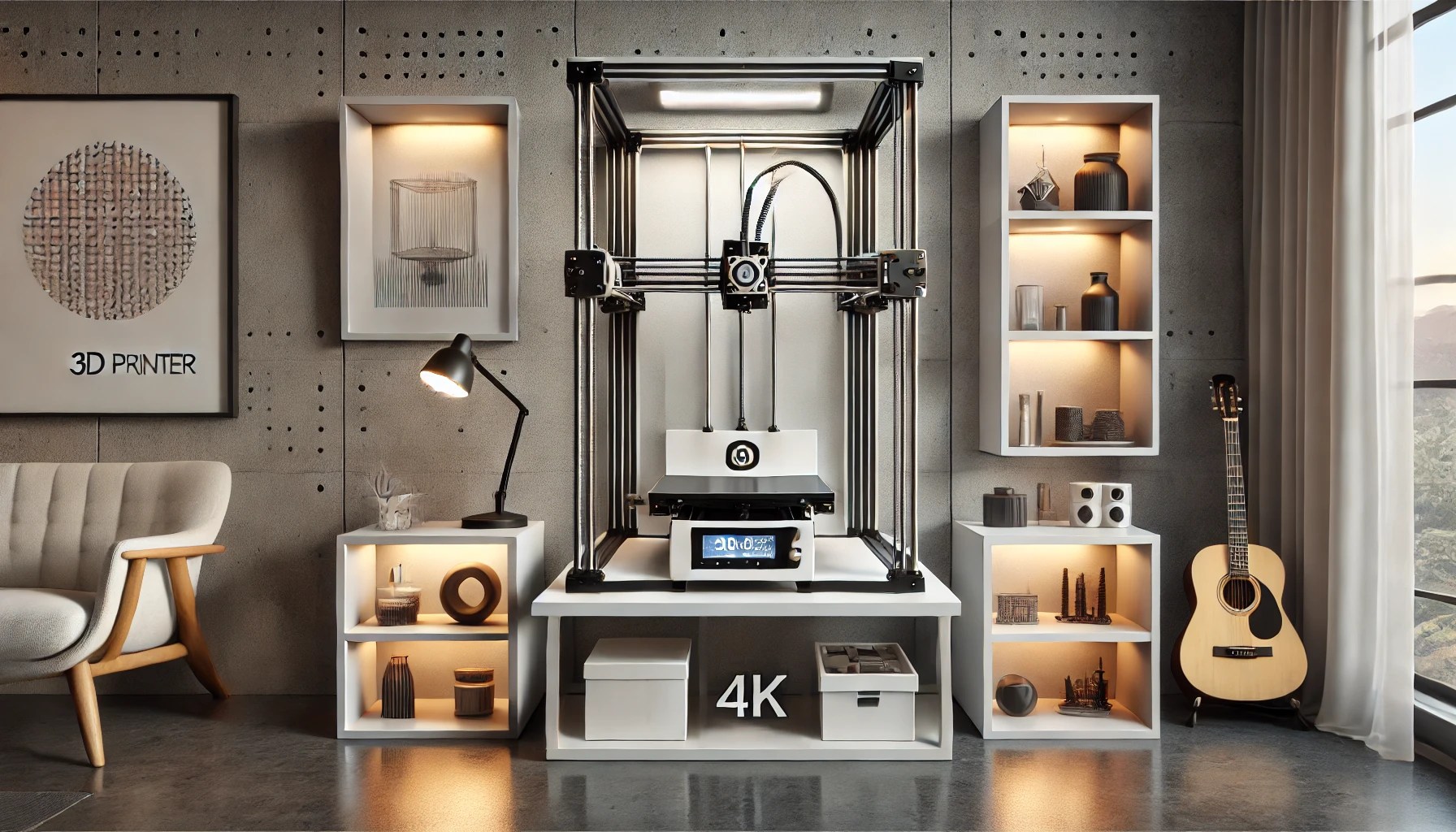
- 3d printers
- CNC
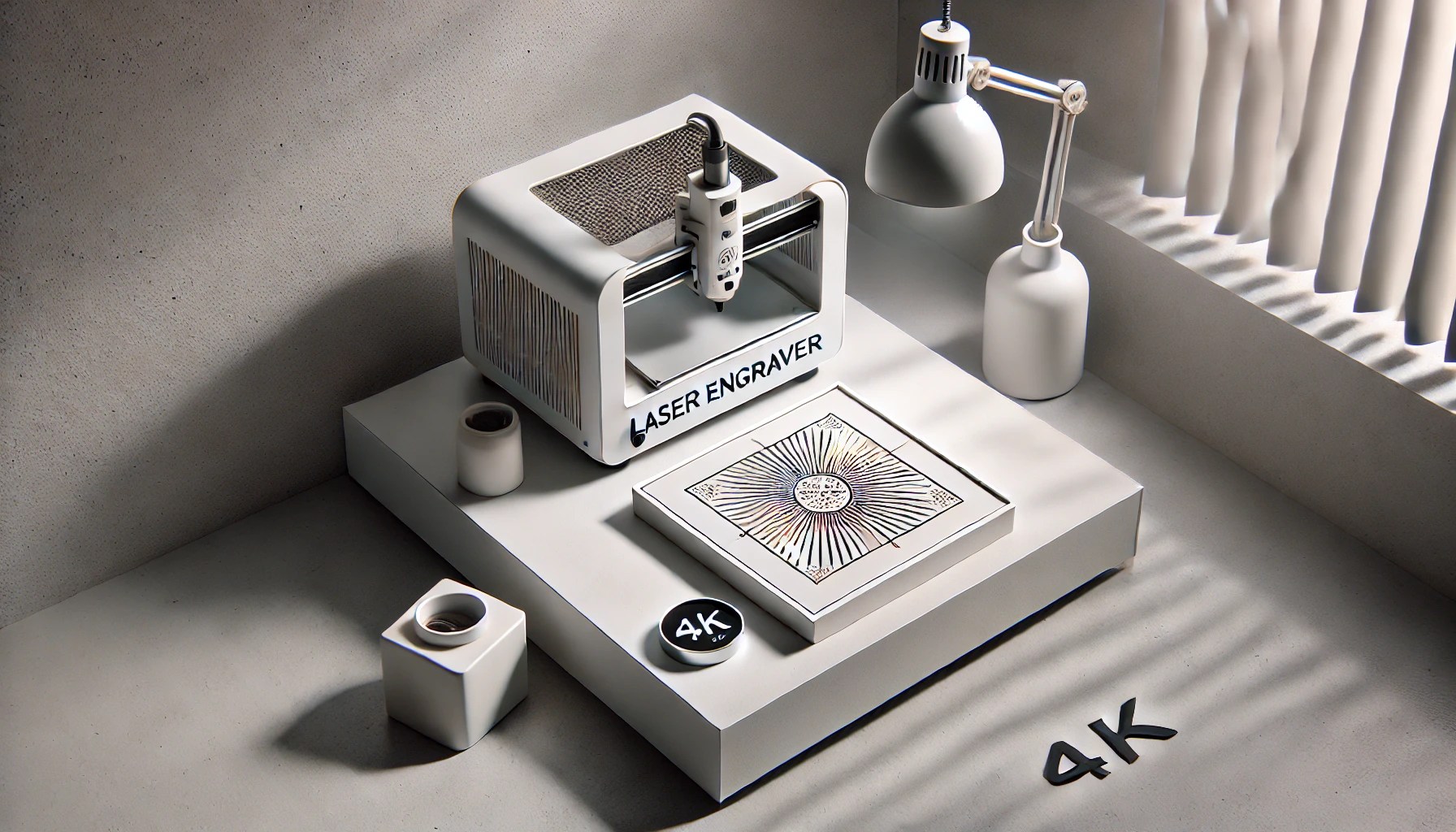
- engraving
- machining tools
- substance producing tools (create new materials from existing
- Assembling
- Hand assembly
- Automated assembly
- Hybrid assembly
- Testing
- Manual testing
- Automated testing

A more comprehensive list would be as follows (from AI):
1. Core Fabrication Tools
- 3D Printing:
- High-Resolution FDM (Fused Deposition Modeling) printers.
- SLA (Stereolithography) printers for detailed parts.
- SLS (Selective Laser Sintering) printers for durable prototypes.
- Multi-material and metal 3D printers for functional parts.
- CNC Machining:
- 3-axis and 5-axis CNC machines for complex precision parts.
- Mini CNC for intricate parts.
- Waterjet cutters for high-precision, multi-material cutting.
- Laser Cutters and Engravers:
- CO2 lasers for non-metals (wood, acrylic).
- Fiber lasers for metal cutting and marking.
- Hybrid Fabrication Tools:
- Multi-axis systems capable of both additive and subtractive manufacturing.
2. Material Synthesis and Processing
- Material Production Tools:
- Polymer extruders for custom filament production.
- Advanced chemical synthesis units for creating new materials.
- Metal sintering systems for powder metallurgy.
- Material Testing Tools:
- Hardness testers.
- Tensile strength measurement tools.
- Thermal and chemical resistance testing systems.
- Bio-Integrated Material Production:
- DNA printers and sequencers for genetic engineering.
- Bioreactors for growing bio-based materials like bacterial cellulose or mycelium.
- Microfluidic systems for on-demand biological compound production.
- Advanced Physics Systems:
- Plasma synthesis chambers for exotic material creation.
- Atomic layer deposition (ALD) systems for precise material coatings.
- Molecular beam epitaxy for layering atomic structures.
- Crystal Growth and Engineering:
- Controlled systems for growing defect-free crystals for semiconductors or optics.

3. Assembly Stations
- Manual Assembly Tools:
- Modular workbenches with precision hand tools.
- Soldering stations for electronics.
- Microscope stations for detailed assembly.
- Automated Assembly Systems:
- Robotic arms for repetitive tasks.
- Pick-and-place machines for electronics.
- Hybrid assembly stations integrating human and robotic workflows.
- Dynamic Assembly:
- Systems capable of reconfigurable assembly based on environmental or operational needs.
- Self-assembling materials and programmable matter.

4. Electronics Prototyping and Manufacturing
- Circuit Fabrication:
- PCB milling machines for in-house circuit production.
- Multi-layer PCB printers.
- Component Testing and Programming:
- Oscilloscopes, multimeters, and signal generators.
- IC programming stations.
- Bio-Electronic Interfaces:
- Integration tools for biological sensors and electronic systems.

5. Testing and Validation
- Manual Testing Tools:
- Calipers, micrometers, and precision measurement tools.
- Stress-testing jigs for mechanical components.
- Automated Testing Systems:
- Environmental chambers for temperature and humidity testing.
- Automated functional testing rigs for electrical and mechanical components.
- Quality control systems with AI-driven inspection.
- Multi-Scale Validation:
- Nano-scale testing tools for atomic-level precision.
- Macro-scale simulators for real-world performance testing.
- Biological Validation:
- Tools to test bio-compatibility (e.g., in-vitro rigs).
- High-resolution microscopes for cellular-level inspection.
- Physics Testing:
- Tools to test thermal, electromagnetic, and quantum properties under extreme conditions.
- Particle accelerators or ion beam systems for stress testing materials.

6. Finishing and Packaging
- Surface Treatment Tools:
- Sandblasting and polishing stations.
- Anodizing and electroplating units for metals.
- Paint and Coating Systems:
- Automated paint sprayers.
- Powder coating units for industrial-grade finishes.
- Packaging Tools:
- Vacuum forming machines for custom packaging.
- Automated packing and labeling stations.

7. Advanced Disciplines
- Tissue Engineering:
- 3D bioprinters for printing living tissues or organoids.
- Scaffolding fabrication tools for growing complex biological forms.
- Incubation chambers for nurturing cells in controlled environments.
- Biohybrid Systems:
- Hybrid machines combining biological and mechanical elements.
- Tools for embedding bio-components (e.g., biosensors) into synthetic systems.
- Energy Transformation Systems:
- Devices for harnessing and directing raw energy forms like electromagnetic fields and plasmas.
- Fusion-based micro-reactors for generating rare isotopes or new materials.
- Quantum-Level Assembly:
- Systems for manipulating individual atoms or quantum dots.
- Tools for creating quantum materials (e.g., superconductors).

8. Cross-Disciplinary Platforms
- Integrated Systems:
- Multi-material hybrid systems blending metals, plastics, and biological materials.
- AI-driven platforms for multi-discipline design optimization.
- Simulation Tools:
- CAD/CAM tools like Fusion360, SolidWorks, and EagleCAD for multi-discipline design.
- Physics and bio-simulation software for prototyping interactions across systems.
9. Sustainability and Recycling
- Recycling Stations:
- Plastic shredders for filament recycling.
- Metal recycling units for waste repurposing.
- Energy Recovery Systems:
- Waste heat recovery from high-intensity processes like plasma systems or lasers.
10. Core Infrastructure
Solar panels or renewable energy integration to power the lab.
Bio-Cleanrooms:
For handling and fabricating biological components without contamination.
Physics-Grade Vacuum Chambers:
Essential for experiments requiring low-pressure environments.
AI and Robotics Synergy:
Autonomous robotic systems for workflows combining biology, electronics, and material science.
Sustainable Power:
Solar panels or renewable energy integration to power the lab.
what I need for my lab, among many things that I can’t even imagine
cnc machine multiaxis , pcb making machine, pcb 3d print , laser cutting ,
metal electroplating, metal 3d print, electron microscope, wood working, baking oven various types (pcb, , metal melting, ceramic curing, metal 3dprint curing, etc),
diverse material plastics, polymers, ceramics, metals, and other materials
detailed semiconductor fabrication room scale make anything,
bio-tissue , cell engineering, generic human and any bioform engineering, (stem cell culture, neuron culture, biochemicals for their growth), cryo generators, and cryo storage,
fabric, nanofabric, carbon nanotubes, graphene,
full-control in a room for all things existing, .. also many things I didn’t list here, there will also be an AI assistant to guide through the lab equipment, and any nuttycranies of it, assistant which can always be accessed, and would document everything that is done, but also will be passive so it can allow the user to think proactively rather than just follow commands.

the lab in above picture looks mostly artificial, (no bio, chem components, )

There would also be a subspace where a subset of equipment will be moved, so work can be done in compact space, more efficiently and in a less cluttered manner

some other views


If you go to transport bay it becomes,


Design bay

…
million years later., the sky is no more as we know, simply each building becomes like a planet with its own gravitational profile, and the entire gravitational profile in universe is broken down into peaked gravity stationary waves.

..
but I can do only whats within my reach, and it seems very impractical to me at this point where nobody has idea how to cancel gravity from fundamental level without using another force,, maybe in the end, we have to rely on mass-inertia, to allow objects to propel..
Original: https://triton7777.wordpress.com/2024/12/09/makerspace/