Triton 47 › Money, work & society › After the PhD
Money flow
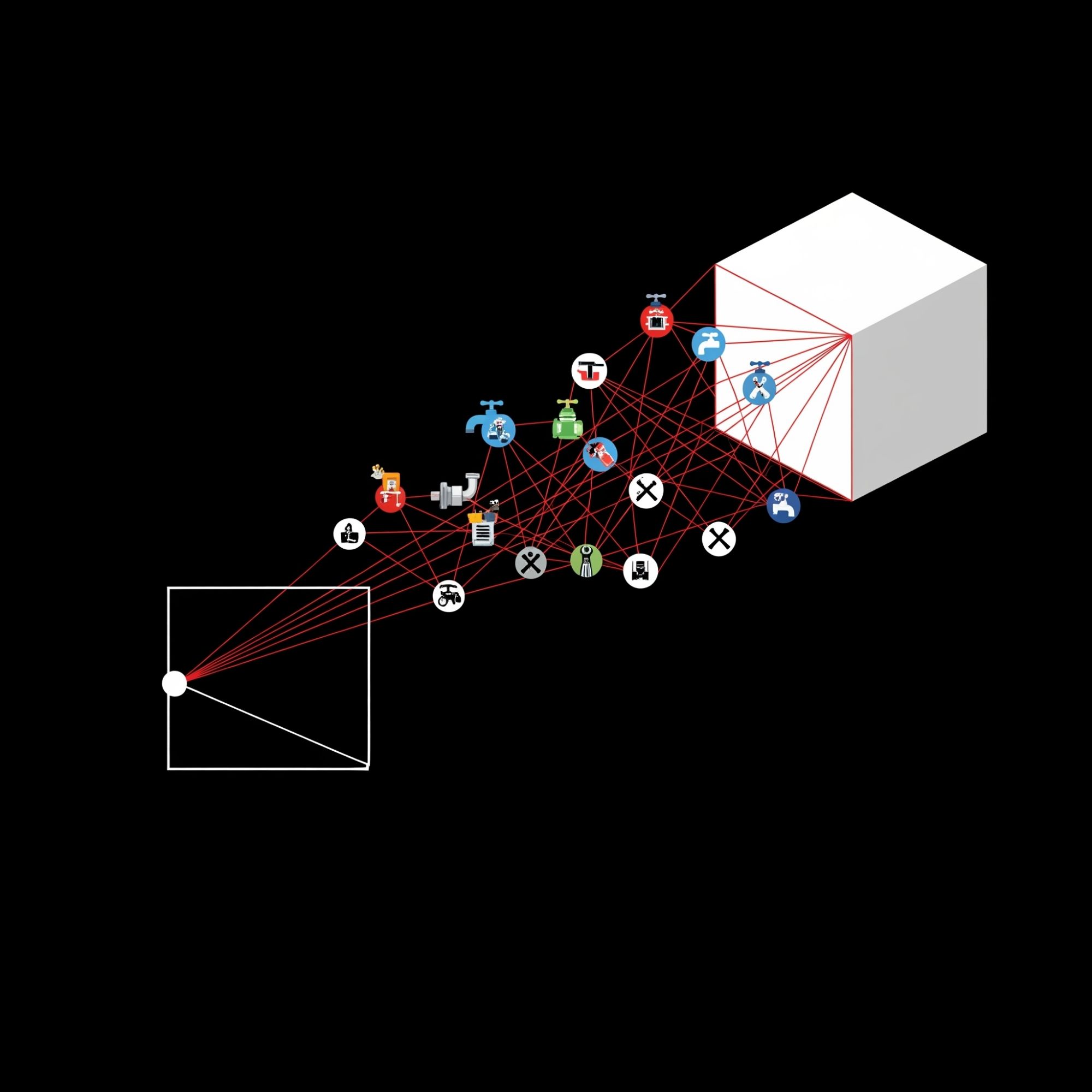
Index note dot→line→square→cube spending chain (Gemini)
ng the interconnectedness of economic activity, where each expenditure creates income for another entity, which in turn has its own expenses. This creates a branching chain or network of spending.
Let’s follow your analogy:
* The Line (Person’s Spending): You, as a person, spend money on various things. One of these is Housing.
* Example: You pay rent.
* The Square (Housing Entity’s Spending): The housing entity (e.g., your landlord or property management company) takes your rent money and spends it on various things. We listed those earlier. Let’s pick one: Repairs and Maintenance.
* Example: Your landlord uses your rent money to pay a Plumbing Company to fix a leaky pipe in your apartment.
* The Cube (The Next Level of Spending): Now, that Plumbing Company, having received payment, also has its own expenses. This is where your “cube of possibilities” comes in. The Plumbing Company spends money on:
* Salaries and Wages: For its plumbers and administrative staff.
* Supplies and Materials: Pipes, fittings, tools, solder, sealant.
* Vehicle Expenses: Fuel, maintenance, and insurance for their vans.
* Rent or Mortgage: For their office/workshop space.
* Utilities: Electricity, water, internet for their office.
* Insurance: Business liability insurance, workers’ compensation.
* Marketing and Advertising: To get more clients.
* Taxes: Corporate income tax, payroll taxes.
* Loan Repayments: If they financed tools, vehicles, or their business.
* Professional Services: Accounting, legal advice.
How Far Can It Go?
This chain of spending can go incredibly deep, branching out at each step. Let’s continue just one thread from the Plumbing Company example:
* Plumbing Company buys Supplies (e.g., copper pipes) from a Wholesaler/Manufacturer.
* The Wholesaler/Manufacturer then spends money on:
* Raw materials (copper ore).
* Factory operating costs (energy, machinery maintenance).
* Employee wages (factory workers, engineers, sales staff).
* Transportation (shipping the pipes).
* Research and Development.
* Taxes.
* The Mining Company that extracts the copper ore spends money on:
* Heavy machinery and its fuel/maintenance.
* Miners’ wages and safety equipment.
* Land leases or purchasing rights.
* Exploration costs.
* Environmental compliance and reclamation.
* Taxes.
* The company that manufactures the heavy machinery for the mining company spends money on steel, electronics, labor, research, etc.
The Limits and Nature of the Chain:
* Basic Inputs: Theoretically, you can trace these chains back to the most fundamental inputs: raw natural resources (land, water, minerals), basic labor, and energy.
* Interconnectedness: It’s not just a single line or cube; it’s a vast, interconnected web or network. The plumber might buy fuel for their van from a gas station. That gas station buys fuel from a refinery. The refinery buys crude oil. The plumber also pays their employee, who then spends money on groceries, housing, etc., starting new chains.
* Circular Flow: Much of this money flows back into the economy. The plumber’s employee uses their wages to pay rent, potentially to the same landlord or another one, illustrating a circular flow of income and expenditure.
* Leakages: The chain isn’t infinitely long in a practical, traceable sense for a single dollar. Money can “leak” out of a specific active spending chain when it’s:
* Saved: If the plumbing company owner saves a portion of their profit rather than spending it immediately.
* Used to Pay Down Debt: This transfers the money to a lender, who then decides how to use it.
* Paid in Taxes: While governments spend tax money (as we saw with property taxes funding public services), the direct link from your initial dollar becomes more diffuse.
* Spent on Imports: If the plumbing company buys tools made in another country, the money flows into that country’s economy.
* Complexity and Scale: The sheer number of transactions and entities involved makes it practically impossible to trace a single dollar bill through its entire journey. Economists study these flows at an aggregate level (macroeconomics) using models and statistics.
So, your “cube of possibilities” is an excellent way to visualize the initial steps. In reality, it quickly expands into a multi-dimensional network or a “hypercube” of economic interactions, demonstrating how deeply interconnected our financial lives are. It goes as far as economic activity itself, constantly branching and flowing.
Original: https://triton7777.wordpress.com/2025/06/04/money-flow/